Last updated 2026-08-19
TL;DR
Delaware does not sell a statewide cattery license. Your real paper is a Division of Revenue business license, local zoning or kennel permission, and a USDA APHIS dealer license if you meet the Animal Welfare Act dealer test, including the four-breeding-female line in 9 CFR 2.1. Year-one cash is mostly cats, cages, vet work, and the building, not state stamps. Confirm every fee with the board that invoices it.
How much does a cattery cost in Delaware?
A first-year cattery in Delaware runs four figures to the mid five figures, and most of that money never touches a license desk. The state publishes no cattery budget. Your real spend is breeding stock, a legal place to keep intact cats, vet screening, food, and litter. Paper is cheap when zoning is clean.
I have not seen a peer-reviewed Delaware study that prices a private cattery. Treat any national startup graphic as entertainment. Breed prices move. One show-quality queen can cost more than every state form combined.
Plan three buckets. Bucket one is legal paper: a Delaware business license, an optional LLC, local use permission, and USDA only if you fit the dealer definition. Bucket two is the site. You need cages or rooms you can disinfect, a true isolation space, and heat and cooling that will not cook a longhair in July. Bucket three is animals and medicine.
Already own a suitable outbuilding in Kent or Sussex and buying one proven queen? You start smaller than someone raising a new barn on a tight New Castle lot. If you need a special exception hearing, idle rent and attorney time will dwarf the Division of Revenue stamp.
People under-save for reproduction work. Progesterone timing, ultrasound, C-section risk, and FeLV and FIV screening all hit before anyone pays you for a kitten. Food is boring and constant.
Put a written zoning answer and a veterinary estimate on paper before you buy a second queen. That order keeps beginners out of a hole.
Do you need a license for a cattery in Delaware?
You do not apply to a Delaware cattery board, because there isn't one. You may still need a state business license, a local kennel or home-occupation permission, and a USDA APHIS dealer license if you meet the federal dealer test. Selling a few pet kittens from home does not automatically mean zero paper.
Read that again. Hobby talk on a group page is not an exemption letter.
Federal law comes first if you are a dealer. 7 U.S.C. § 2132 defines a dealer, in part, as any person who, in commerce, for compensation or profit, buys or sells an animal "for research, teaching, exhibition, or use as a pet." [3] 9 CFR 2.1 then requires a valid license for a person operating as a dealer unless an exemption in paragraph (a)(3) applies. [1]
The exemption people quote is the four-breeding-female line. 9 CFR 2.1 covers "any person who maintains a total of four or fewer breeding female dogs, cats, and/or small exotic or wild mammals, such as hedgehogs, degus, spiny mice, prairie dogs, flying squirrels, and jerboas, and who sells only the offspring of these animals, which were born and raised on his or her premises, for pets or exhibition, and is not otherwise required to obtain a license." [1]
Keep five breeding queens, buy and resell cats, or sell wholesale, and you should not assume you are exempt. APHIS is the board that decides. Confirm with Animal Care before you invent a hobbyist story.
Delaware still wants its own business license if you are doing business in the state. Title 30, Chapter 23 requires annual license taxes for listed occupations. [5] Title 30, Chapter 29 covers retail and wholesale merchants and the gross receipts system. [6] File with the Division of Revenue. Many people use One Stop. [7]
Cities and counties add animal and zoning rules. New Castle County's Unified Development Code is the book that says whether a kennel or animal facility is allowed on your parcel. [14] That is not a cattery license either. It can still stop you.
| Paper | Who issues it | Typical trigger |
|---|---|---|
| USDA dealer license | APHIS Animal Care | Dealer under the AWA (see 9 CFR 2.1) |
| DE business license | Division of Revenue | Doing business in Delaware |
| LLC Certificate of Formation | Division of Corporations | Only if you choose to form an LLC |
| Local kennel or use permit | City or county | Kennel or home occupation rules on that lot |
| EIN | IRS | Bank account, hiring, many applications |
When does USDA licensing apply to a Delaware cat breeder?
USDA licensing applies when you are a dealer under the Animal Welfare Act and you do not fit a 9 CFR 2.1 exemption. For many small home breeders, the practical tripwire is more than four breeding female cats, or sales that are not only offspring born on your place. Confirm your facts with APHIS Animal Care. Do not guess from a forum.
APHIS licenses Class A breeders and other classes. You apply, you pay the fees set in 9 CFR 2.6, and you pass a facility inspection. [2] I will not quote a processing week count. APHIS sets that calendar. 9 CFR 2.5 states how long a license stays effective. Read the current text. [12]
Fees live in 9 CFR 2.6. The version published on eCFR has listed a $120 application fee. [2] License fees can scale with activity. Confirm the live dollar amounts in 9 CFR 2.6 before you send money, because fee tables get amended. [2]
A USDA license is not a Delaware land-use permit. You can hold a federal dealer license and still be illegal on a residential lot. Run both tracks.
Place an occasional litter of pet kittens from three queens, all born at home, and never wholesale, and many people operate without a USDA number. That is a description of the regulation, not a blessing. APHIS can still look at what you actually do.
Call Animal Care and describe your real sales pattern before you spend thousands on queens. Cheap phone call.
What Delaware state tax paper do you file?
You file a Delaware business license with the Division of Revenue if you are doing business here, and you account for gross receipts tax in the merchant chapters of Title 30. You also get a free IRS EIN if you will open a business bank account or hire anyone. Confirm the license class and the current tax rate with Revenue. Do not copy a blog's category code.
Delaware Code Title 30, Chapter 23 says persons in the listed occupations pay annual license taxes at the rates in that section. [5] Many of those lines have long sat near $75, but your class may not be that line, and the General Assembly can change a number. Read the chapter, then ask Revenue which class a cat breeder belongs in. [7]
Sell kittens to the public and you may land in the retail merchant rules in Title 30, Chapter 29. [6] That chapter is also where gross receipts tax lives. Delaware uses gross receipts instead of a state sales tax. Confirm the current rate with the Division of Revenue. [7]
Form an entity only if you want the entity. The Division of Corporations fee schedule has listed the Limited Liability Company Certificate of Formation at $90. [8] The LLC annual tax has long been $300. [9] Confirm both on the live fee pages before you file.
The IRS does not charge to issue an EIN online. [11]
CatteryPath sells a $149 USDA + State Cattery Kit that stacks the federal and Delaware forms so you are not hunting PDFs at midnight. Use it or skip it. The statutes above are public.
Already hold some other Delaware business license? Do not assume it covers kitten sales. Ask Revenue. Wrong class is how people get messy letters.
How much do county zoning and local kennel rules add?
Local zoning and kennel rules can cost more than every state form, or they can cost nothing if your parcel already allows the use. There is no single Delaware kennel fee. New Castle, Kent, and Sussex do not share one animal chapter. Get the use in writing from the county or city that has the dirt.
New Castle County's Unified Development Code controls whether a kennel or animal facility is a permitted use, a special use, or a forbidden use on your lot. [14] Read that book. Then read the county animal rules for noise, waste, and keeping limits. Do not skip the zoning volume.
Wilmington, Newark, Dover, Middletown, and the beach towns stack municipal business licenses and animal ordinances on top of the county. If you sit inside a town line, call the town first.
HOA covenants can ban breeding even when the county would allow it. That fight is private contract, not a state license.
Don't buy a house for a cattery until a planner emails the permitted use. Verbal "should be fine" is how people own an expensive problem.
Special exception hearings take time. Neighbor notice. Parking and waste conditions. If you need that path, your cattery timeline is the hearing calendar, not the Revenue website.
Compared with a state like cattery cost in Connecticut, Delaware leaves more of the animal-facility decision to local government. That is flexible if you have acreage. It is a trap in a packed subdivision.
How long does a cattery take in Delaware?
A Delaware cattery takes as long as your slowest gate. Clean business license filings can be quick. USDA inspection, if you need it, follows APHIS. Zoning hearings can take a season. The cats themselves take months. Nobody should promise you a first litter on a state clock.
I will not invent Division of Revenue or APHIS processing times. Confirm current queues with the office that has your application. Same-day internet folklore goes stale.
Building already legal for the use? You can be in business on paper in a short stretch: EIN, state business license, bank account. That is not the same as being ready to breed.
Queens bought as kittens need to grow. You wait on heat cycles, progesterone, stud travel or semen, gestation (about nine weeks), weaning, and the age your contract allows a kitten to leave. A year from "I decided" to "a kitten went home" is normal if you start with young females. Faster if you buy a proven adult and your rooms are already built.
Build-out is the other clock. Isolation room. Washable surfaces. A place for a queen and litter that is not a child's bedroom. HVAC that holds in a Delaware August. That work is contractor time, not license time.
If USDA applies, do not operate as a dealer until the license is in hand. 9 CFR 2.1 is the must-have-a-valid-license rule. [1]
I'd rather sit idle for two months than rush a first breeding in a half-finished laundry room.
What do queens, vet care, and housing cost in year one?
Year-one animal and housing costs dwarf licenses, and Delaware has no official price list for either. Budget the cats, the vet protocol, and a room you can bleach. Then add a reserve for a C-section, because that bill does not wait for your next paycheck.
Purchase prices for breeding queens vary by breed, title, and whether the seller will actually take a cat back. I will not fake a Delaware average. Look at recent placements in your breed, then assume you will also pay for testing already done, or you will repeat it.
Screen for FeLV and FIV. The 2020 AAFP feline retrovirus guidelines, published in the Journal of Feline Medicine and Surgery, are what many clinics actually follow. [15] Use a veterinarian. Skip the comment-thread titer fight.
Rabies vaccination is not a vibe check for adult cats in Delaware. Title 3, Chapter 82 is the rabies control chapter. [10] Read the vaccination sections and match your ages at sale to what your veterinarian will sign.
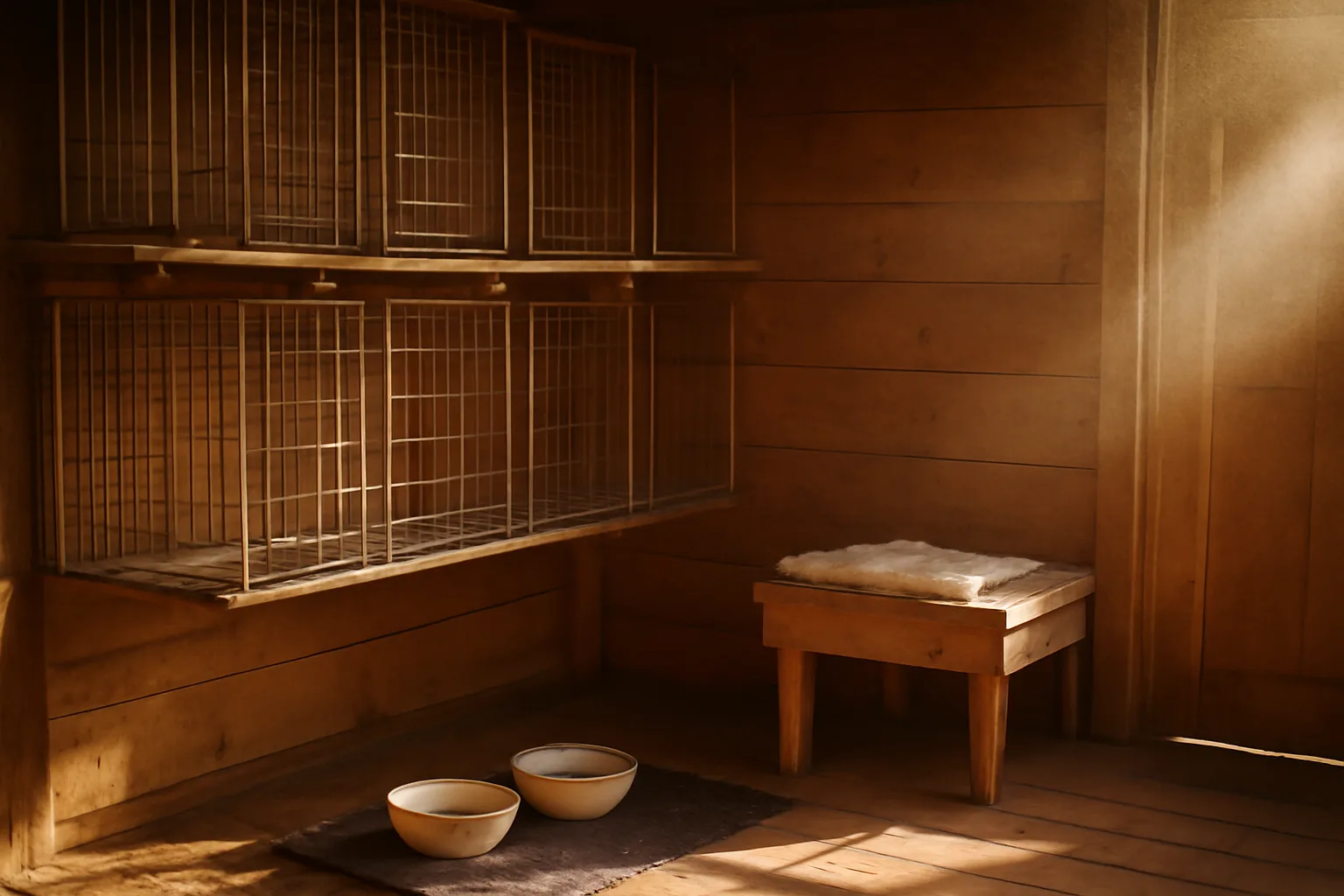
Housing splits people. Stacked wire condos are cheaper than a rebuilt garage and worse for some breeds. Solid isolation for a new arrival matters more than matching paint. Spend on a real door and ventilation before you spend on engraved nameplates.
Food and litter for several intact adults is a monthly burn even in months you sell nothing. That is why a one-queen start is saner than a five-queen fantasy.
Want the same first-year buckets under different state paper? Read cattery cost in Florida and cattery cost in California.
Should you form a Delaware LLC for a cattery?
You do not need an LLC to breed cats in Delaware. People form one anyway because Delaware entity law is familiar and banks like a document. An LLC is a liability box, not a cattery license, and it adds the Division of Corporations filing plus the annual tax.
The Division of Corporations fee schedule has listed the LLC Certificate of Formation at $90. [8] The LLC annual tax has been listed at $300. [9] Confirm both. Miss the annual tax and Delaware will not care that your queen missed a breeding.
Insurance is a separate buy. Ask a commercial insurer about animal bailee coverage, bites, and customer visits. I have no honest statewide premium table. Get quotes. Skip the "I just use my homeowner policy" advice until you read the exclusion for business use.
Registered agent fees are extra if you are not your own agent. Keep that in the entity column.
Form the LLC after zoning is possible, not before. Paying $300 a year to hold an LLC for a use your lot forbids is a hobby of a different kind.
Sole proprietor is legal. It is also you, personally, on the vet bill and the bite claim. That is the trade.
Does Delaware charge sales tax on kittens?
Delaware does not charge a state sales tax on kittens, or on much else. You can still owe gross receipts tax on what you take in, and another state may tax a remote buyer. Confirm the current gross receipts rate and category with the Division of Revenue. [7]
This surprises people who moved from Maryland or Pennsylvania. No sales tax is not the same as no tax.
Title 30, Chapter 29 is the merchant chapter to read. [6] File the reports on the schedule Revenue assigns. Late gross receipts tax is a boring way to have a bad year.
Sell a kitten to someone in a sales-tax state and their use-tax rules are their problem, and sometimes yours if you have nexus there. I am not going to fake a multi-state nexus analysis. Ask a Delaware CPA if your volume leaves the state.
Municipal license taxes inside a city are another layer. Wilmington is not the Division of Revenue.
Keep invoices. Gross receipts questions are paperwork fights. A cattery buyers visit in person still needs the same receipt trail as an online placement.
What would I spend first, and what is a waste of money?
I would spend first on written zoning, a veterinarian who will actually do reproduction work, one proven queen with current tests, and a room I can disinfect. I would not spend first on a logo, a pile of domain names, or a national cattery certificate that no Delaware inspector will ask to see.
Waste of money: paying a service that implies Delaware issues a special cattery card. Waste: five related kittens from one online seller before you have isolation. Waste: fancy cabinetry in a space you do not yet have permission to use.
Useful: a simple contract, a deposit policy you will actually enforce, and a clinic that will take a 2 a.m. dystocia.
Cash tight? Stay under the USDA four-breeding-female line on purpose until you know you can handle inspections. That is a business choice, not a ranking of who loves cats more.
Compare your paper load with cattery cost in Colorado or cattery cost in Arizona if you are deciding where to live and breed. Moving states to dodge a modest business license is silly. Moving because your lot cannot be a kennel is not.
How does Delaware cattery paper compare with other states?
Delaware is a local-control state with a light state animal-facility stamp and a real federal overlay. That is different from states that run a department-of-agriculture kennel license with published animal counts. Your comparison shopping should start with that shape, not with a single dollar figure.
Want another Mid-Atlantic style paper path? Read cattery cost in Connecticut. For heavier state licensing cultures, cattery cost in California and cattery cost in Illinois show more state-level animal facility paper. cattery cost in Georgia and cattery cost in Alabama help if you are weighing South versus Mid-Atlantic land costs.
USDA does not change at the Delaware line. 9 CFR 2.1 is the same in New Castle County and anywhere else in the country. [1] What changes is whether your county treats five cats as a kennel.
Land is the real Delaware variable. Sussex acreage and a Wilmington rowhouse are not the same project.
What records should a Delaware cattery keep from day one?
Keep the records a USDA inspector, a Revenue auditor, and your veterinarian would each ask for, even if you never meet the first two. That means animal IDs, intake dates, disposition, vaccination certificates, test results, and every dollar in and out. Sloppy books cost more than a filing cabinet.
Licensed under the AWA? 9 CFR Part 2 has record rules. Read them. If you are not licensed, still keep the same core log. Buyers will ask. A court will ask if a kitten makes someone sick.
Rabies certificates belong in a folder you can find. Title 3, Chapter 82 is not theoretical when an animal bites. [10]
Contracts and deposit receipts belong there too. Delaware is a small state. Your reputation travels.
I like a paper backup. Cloud-only photos of a pedigree die with a dead phone.
Interstate placements usually need a certificate of veterinary inspection from an accredited veterinarian. Ask the receiving state's animal health office what that certificate must say. Do not invent the form from memory at the last rest stop.
Where do you confirm fees before you pay anyone?
Confirm every dollar with the board that takes the money. APHIS for USDA fees. Division of Revenue for the business license and gross receipts. Division of Corporations for LLC amounts. Your county or city for kennel and use fees. If a number in this article disagrees with the live page, the live page wins.
CatteryPath is an independent publisher, not a law firm and not a service company. We do not approve applications and we do not quote hidden quotas. If you want the form stack in one place, the kit is at /start. You can also download every primary document from the citations and do it yourself.
Call the county before you call a realtor. Call a veterinarian before you call a stud owner. That order saves money in Delaware.
Frequently asked questions
Do you need a license for cattery in delaware?
There is no statewide cattery license. You may still need a Delaware Division of Revenue business license, local zoning or kennel permission, and a USDA APHIS dealer license if you meet the Animal Welfare Act dealer test. Confirm your facts with those offices. A hobby label on social media is not an exemption.
How much does cattery cost in delaware?
Licenses are the small line. Year one runs four figures to the mid five figures once you add queens, cages, vet screening, food, and a legal space. Nobody publishes a solid Delaware cattery study, so treat national averages as noise. Confirm current filing amounts with Revenue, Corporations, and APHIS.
How long does cattery take in delaware?
Paper can move in days if zoning is already clean. USDA, if it applies, waits on an APHIS inspection. Hearings can eat a season. Cats take longer: a young queen is not a reliable producer in month three. Confirm processing queues with the office holding your file. No one can honestly guarantee a first-litter date.
Does Delaware issue a state cattery or kennel license?
No dedicated statewide cattery card exists. The state paper you actually meet is the Title 30 business license and gross receipts system at the Division of Revenue. Kennel permission, if any, is local zoning and local animal rules. USDA is federal and only applies if you are a dealer under 9 CFR 2.1.
How many breeding queens trigger USDA licensing?
9 CFR 2.1 sets a commonly cited exemption at four or fewer breeding female cats when you sell only offspring born and raised on your premises and you are not otherwise required to be licensed. Five breeding queens, resale, or wholesale activity can pull you into dealer licensing. Ask APHIS Animal Care about your real pattern.
Is there sales tax on kittens in Delaware?
Delaware has no state sales tax, so you do not add a state sales-tax line on a kitten invoice. You can still owe gross receipts tax under Title 30, Chapter 29. Confirm the current rate and category with the Division of Revenue. A buyer in another state may have use-tax rules of their own.
How much is a Delaware LLC for a cattery?
You do not need an LLC to breed cats. If you form one, the Division of Corporations fee schedule has listed Certificate of Formation at $90 and the LLC annual tax at $300. Confirm both on the live fee pages before you file. An LLC is not a substitute for zoning permission or a USDA license.
Do cats in Delaware need rabies shots before sale?
Title 3, Chapter 82 is Delaware's rabies control chapter. Adult dogs, cats, and ferrets are the animals that chapter is built around. Match sale age and certificate timing to what a Delaware veterinarian will sign. Keep the paper. A missing rabies record is a bad fight after a bite.
Can I run a cattery in a residential neighborhood in Delaware?
Sometimes, often not. The county or city Unified Development Code (or zoning ordinance) decides if a kennel or home occupation is allowed. HOA rules can ban breeding even when zoning would allow it. Get the use in writing before you buy queens or renovate a garage. Verbal reassurance is not a permit.
What business license category do cat breeders use in Delaware?
Title 30 lists occupations and merchant classes, but the right box for kitten sales is a Division of Revenue question, not a guess from a forum. Retail merchant rules in Chapter 29 are the chapter to read if you sell to the public. Ask Revenue which class to file. Wrong class creates messy correspondence.
Do I need USDA if I only sell kittens in person from my home?
In-person retail does not automatically exempt you. 9 CFR 2.1 still looks at whether you are a dealer and whether you fit the four-or-fewer breeding-female exemption and the home-born offspring limit. Sight-unseen shipping, resale, and wholesale are extra risk. Describe your real sales to APHIS before you assume you are out.
What is a waste of money when starting a Delaware cattery?
Paying anyone who implies Delaware issues a secret cattery card. Buying a related group of kittens before you have isolation. Building fancy cabinets in a space you cannot legally use. Spend first on written zoning, one proven queen, a reproduction-ready veterinarian, and a room you can bleach.
Do I need a health certificate to send a kitten out of Delaware?
Most destination states want a certificate of veterinary inspection from an accredited veterinarian. That is receiving-state animal health law plus USDA accreditation practice, not a Delaware cattery license. Ask the destination state what the certificate must say. Do not invent the form the night before travel.
Sources
- eCFR, 9 CFR § 2.1 Licensing and registration: A person operating as a dealer must have a valid USDA license unless a 9 CFR 2.1(a)(3) exemption applies, including the four-or-fewer breeding female cats line for home-born offspring sold as pets or exhibition.
- eCFR, 9 CFR § 2.6 Annual license fees: USDA APHIS application and license fees for Animal Welfare Act licenses are set in 9 CFR 2.6, which has listed a $120 application fee in the published eCFR text.
- U.S. House Office of the Law Revision Counsel, 7 U.S.C. § 2132: The Animal Welfare Act defines a dealer as a person who, in commerce for compensation or profit, buys or sells animals for research, teaching, exhibition, or use as a pet, with statutory exceptions.
- Delaware Code, Title 30, Chapter 23 Occupational and Business Licenses and Taxes: Delaware requires persons in listed occupations to pay annual license taxes at the rates specified in Title 30, Chapter 23.
- Delaware Code, Title 30, Chapter 29 Retail and Wholesale Merchants' License Requirements: Retail and wholesale merchants in Delaware are licensed and taxed under Title 30, Chapter 29, which is the gross receipts chapter for those classes.
- Delaware Division of Revenue, Business Taxes and Licenses: The Delaware Division of Revenue issues state business licenses and administers gross receipts tax, and publishes current rates and filing forms.
- Delaware Division of Corporations, Fee Schedule: The Division of Corporations fee schedule lists the Limited Liability Company Certificate of Formation filing amount, long published at $90.
- Delaware Division of Corporations, How to Pay Annual Taxes and File Annual Reports: Delaware LLCs pay an annual tax to the Division of Corporations, long published at $300, which must be confirmed on the live tax page.
- Delaware Code, Title 3, Chapter 82 Rabies Control in Animal and Human Populations: Delaware's rabies control chapter in Title 3, Chapter 82 is the state law that governs rabies vaccination duties for covered companion animals.
- IRS, Apply for an Employer Identification Number (EIN) Online: The IRS issues an EIN online at no charge for eligible applicants.
- eCFR, 9 CFR § 2.5 Duration of license and termination of license: 9 CFR 2.5 is the Animal Welfare Act regulation that states how long a USDA dealer license stays effective and when it terminates.
- New Castle County Unified Development Code (Municode): New Castle County's Unified Development Code is the land-use code that determines whether a kennel or animal facility is allowed on a given parcel.
- Journal of Feline Medicine and Surgery, 2020 AAFP Feline Retrovirus Testing and Management Guidelines: The 2020 AAFP feline retrovirus guidelines are the clinic-facing protocol many veterinarians use for FeLV and FIV testing and management.