Last updated 2026-08-18
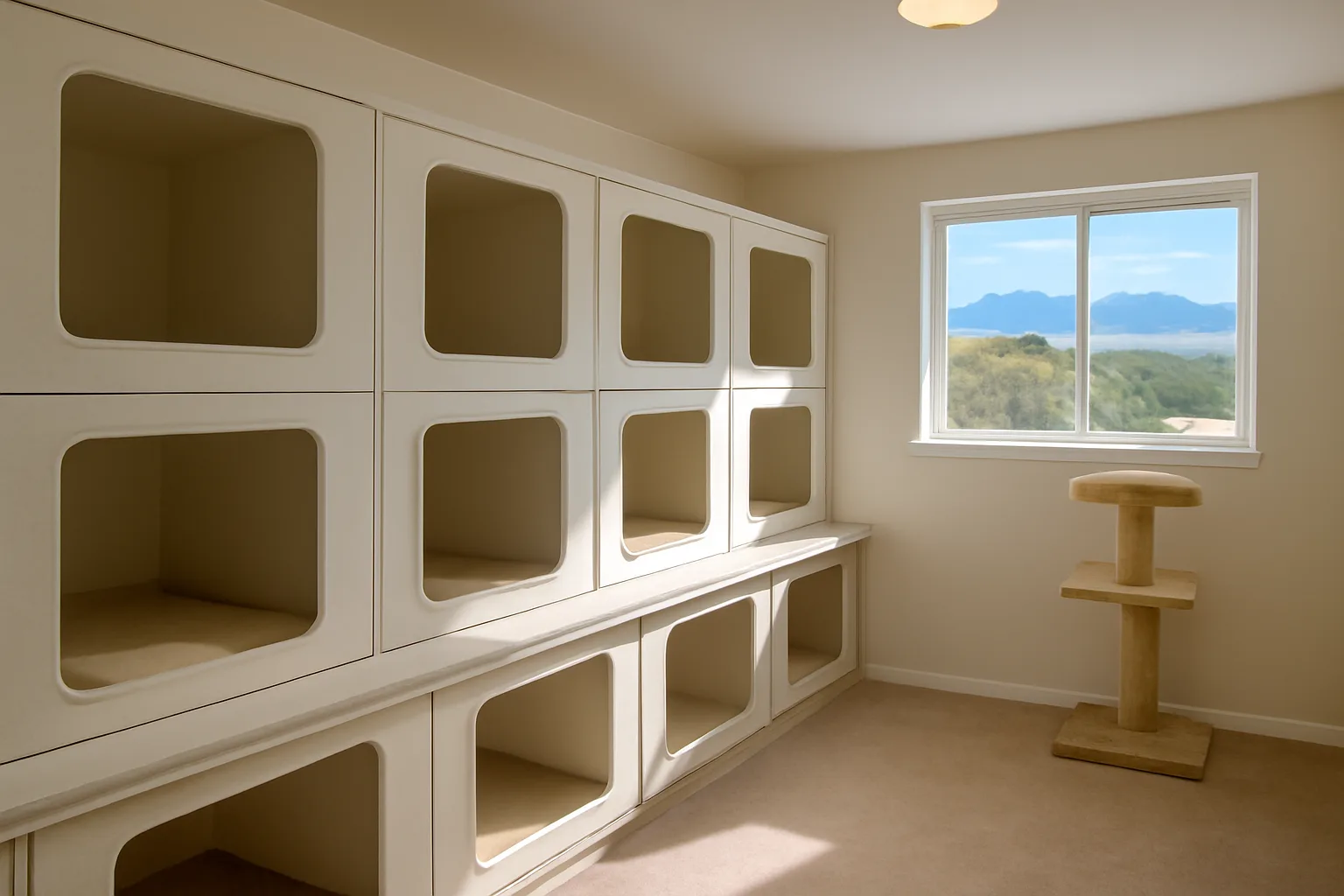
TL;DR
Colorado has no state cattery board and no state-issued cattery license. Catteries here answer to the USDA Animal Welfare Act if you sell kittens sight unseen, plus city or county zoning, a business license, and sales tax. Budget $120 to $225 for the USDA license, $30 to $300 for local permits, and $3,000 to $25,000 for facility setup. The federal application runs 2 to 4 months.
Is there a cattery board in Colorado?
No. Colorado has no standalone state cattery board, no state cattery license, and no state-run breeding permit for cats. The state hands commercial cat breeding to two layers: federal USDA regulation and your local city or county government.
This catches most people off guard. They search for a "Colorado cattery board" or a "Colorado cattery license" and find nothing, because neither exists. The Colorado Department of Agriculture runs the Pet Animal Care Facilities Act (PACFA), but that act covers shelters, rescues, and boarding kennels. Commercial cat breeders who sell straight to the public sit outside PACFA's licensing net [1].
What you actually deal with is the USDA Animal and Plant Health Inspection Service (APHIS), and only if you sell kittens sight unseen. Sight unseen means the buyer never physically sees the cat at your premises before paying: online, shipped, or any remote sale. That federal license is your core operating permission. Then you layer on whatever your town wants: a general business license, a home occupation permit if you run it from your house, and possibly a zoning review. Counties like Larimer, Jefferson, and El Paso have their own animal enterprise rules. Denver has municipal code chapters on animal facilities. Call your county planning department and ask the blunt question: "Does a home-based cat breeding business need a special use permit here?"
Do you need a license for a cattery in Colorado?
It depends on how you sell. If every buyer visits your home or cattery in person and sees the kitten before paying, you're retail-only, and USDA does not require a Class A or Class B license. You still need a Colorado sales tax license from the Department of Revenue (it's free, called a Sales Tax Account) plus whatever business license your town mandates [2].
Sell even one kitten sight unseen and the USDA rule flips. Now you need at least a Class A (breeder) license under the Animal Welfare Act. The threshold, straight from USDA regulation, covers anyone who sells a pet dog or cat "if the buyer does not physically enter the facility where the animal is housed and examine the animal prior to taking custody" [3]. The agency does not care if the cat leaves by air, by ground carrier, or by meeting in a parking lot. Sight unseen is the trigger.
A Class A license covers breeding and selling your own animals. Class B covers brokers and resellers, and most cattery owners never touch it. The Class A application fee runs $120 to $225 depending on your annual sales volume [4]. Renewal costs the same range every year. USDA inspectors check housing, feeding, recordkeeping, and a written veterinary care plan. Start your application through the USDA APHIS Animal Care office in Fort Collins. Yes, they cover Colorado from right inside the state. That office handles your pre-inspection and paperwork. The phone is (970) 494-7460.
Colorado PACFA does not license home-based cat breeders. So you don't file with the state. You file with the feds.
What local permits do Colorado catteries actually need?
Set the USDA license aside for a second. Colorado cities and counties rule your daily operation, and there is no single list. Each municipality writes its own. Here are the layers we see across Colorado Springs, the Denver metro, Boulder, Fort Collins, and rural counties:
1. Sales Tax License (state level, all sellers). Register with the Colorado Department of Revenue. The license costs $0 to $16 depending on a small deposit requirement. You collect and remit state sales tax at 2.9%, plus any local district taxes. Denver's combined rate hits 8.81%. Fort Collins runs about 7.55%. Check your exact address rate with the Colorado Sales Tax Rate Lookup tool [5].
2. City or County Business License. Runs $20 to $300 a year, depending on the jurisdiction. Aurora requires a general business license for home occupations. Boulder requires a Home Occupation Permit if you have business traffic at your residence. Rural counties like Weld or Mesa often skip a general license unless you're inside an incorporated city. Confirm by calling the clerk's office.
3. Zoning Approval / Home Occupation Review. Almost any Colorado town with zoning treats a home cattery as a "home occupation" or "accessory use." The standard limits: no exterior sign, no outside storage, few or no non-resident employees, and no nuisance (odor, noise, traffic). Denver's zoning code Section 11.9.5 spells out these rules [6]. Neighbors who complain about cat odor or a stream of visitor cars can summon a code enforcement visit. Some counties cap the number of intact breeding animals under home occupation rules, often at 4 to 6 dogs or cats, though cats sometimes get counted separately.
4. Animal Welfare / Noise Ordinance. Longmont and Littleton have specific animal noise and nuisance ordinances. Fort Collins municipal code Chapter 4 regulates animal businesses. Read your local code before you buy property. An HOA can shut you down faster than any city if the covenants forbid "commercial animal keeping" or "breeding."
5. Waste Handling. Large catteries (over roughly 15 breeding females) can trigger county health department review for animal waste disposal and water quality if you're on well and septic. Jefferson County Environmental Health asks questions when an operation runs past a standard residential septic design load.
How much does a cattery cost in Colorado?
Costs break into three layers: license and permit fees, facility setup, and monthly run rate. The ranges below come from breeder filings, USDA data, and Colorado municipal fee schedules.
Layer 1: Licenses and permits (one-time plus annual renewal)
- USDA Class A license: $120 to $225 application fee, same range for annual renewal [4]
- State sales tax license: $0 to $16 (deposit may apply) [5]
- Local business license: $30 to $300 a year (varies wildly by town)
- Home occupation permit (if required): $50 to $200 one-time in most Colorado cities
- First-year layer 1 outlay: roughly $120 to $600. Renewal year: $120 to $450.
Layer 2: Build-out a usable indoor-outdoor setup Converting a spare bedroom and adding a secure outdoor catio runs $2,000 to $8,000. A purpose-built cattery with HVAC, drainage, and a separate isolation room runs $15,000 to $40,000. Most Colorado catteries start in a finished basement or a detached workshop fitted with sealed flooring, washable walls, cage banks, and a window catio for fresh air. Colorado adds cost you don't see in milder states: insulation for winter plains lows of -10 to 20 F, and cooling for summer highs of 90 to 100 F. Do not skimp on HVAC. USDA inspectors flag ambient temperature extremes as a welfare problem.
Layer 3: Monthly run rate Feed (good wet and dry) runs $100 to $400 a month for 5 to 10 breeding cats. Veterinary care, vaccines, and spay or neuter of pet kittens run $200 to $600 a month depending on how often you have litters. The Colorado State University veterinary teaching hospital in Fort Collins is a strong resource for reproduction work, but strong doesn't mean cheap. Lepto vaccines, FIV and FeLV testing, and queen ultrasounds pile up. Litter, cleaning supplies, and utilities run $150 to $300 a month. All in, a 5-queen cattery burns $800 to $1,400 a month in variable costs, before your own labor.
Want a single total startup number? A Colorado USDA-licensed home cattery with 4 to 6 breeding females, working out of an existing room, typically costs $4,000 to $12,000 to open. That includes the first-year license, a modest build-out, starter breeding stock, and equipment. A dedicated structure pushes to $25,000 to $40,000. Nobody should quote you lower without seeing your space and your local code.
One cost people forget: Colorado personal property tax. If your county assessor tags cattery equipment and breeding cats as business personal property, you file a declaration every year. The exemption threshold is $7,900 in total business personal property value. Below it, you generally owe nothing. Above it, you pay a rate set by your county mill levy [7].
How long does a cattery license take in Colorado?
From the day you mail your USDA application to the day you hold an active license, plan for 2 to 4 months. A few things stretch that window in Colorado.
The USDA APHIS office in Fort Collins processes most Colorado applications. The steps:
1. You submit USDA Form 7003 (Application for License) with the $120 to $225 fee. Turnaround to inspector assignment: 2 to 4 weeks [3]. 2. The inspector contacts you to schedule a pre-license inspection. That appointment often lands 2 to 6 weeks after assignment. Colorado's inspector workload swings with the number of research facilities, shelters, and breeders in queue. Fort Collins has a heavy concentration of regulated sites, which can add a week or two. 3. On inspection day, the inspector walks your facility against the Animal Welfare Act standards: housing, ventilation, lighting, sanitation, record system, veterinary care plan, and secure containment. Pass with no noncompliant items (NCI) and the inspector sends approval to the regional office within a few days. 4. Central licensing issues your certificate number and mails your license packet, roughly 2 to 4 weeks after a passed inspection.
Total: 8 to 16 weeks. We've heard of Colorado breeders who cleared it in 6 weeks and others who waited 14 weeks for the inspection slot alone. USDA does not publish a processing-time dashboard. Your only real move is to ask the Fort Collins office for current wait estimates when you call.
Local permits run on their own clock. A Denver home occupation permit takes 2 to 10 business days. A Boulder planning review can take 10 to 30 days if zoning staff is backed up. None of these local steps wait on USDA, so start them at the same time. You can open your sales tax account with the Department of Revenue online in about 15 minutes.
Do not buy breeding stock or advertise kittens before your USDA license number is active. Selling sight unseen before the license issues invites enforcement, from a warning letter to a stipulated fine.
What does the Fort Collins USDA office look for in a Colorado cattery?
The USDA APHIS Animal Care inspector shows up with a checklist rooted in 9 CFR Part 3, Subpart A, the specifications for dogs and cats. Colorado's dry air and altitude add real twists. Forced-air heat parches the air in winter, and high-altitude summer sun overheats windowed rooms fast. Your setup has to prove you control both.
Primary indoor housing temperature must not fall below 45 F or rise above 85 F for more than four consecutive hours [8]. At Front Range altitudes (5,000 to 6,500 feet), the sun-facing side of a building can spike 15 F above outdoor ambient by 2 p.m. Shade cloth, reflective window film, and a thermostat-controlled exhaust fan are cheap fixes that pass.
Flooring has to be impervious to moisture. In Colorado basements, radon mitigation pipes sometimes pierce the slab. Seal those penetrations with epoxy so wash-down water doesn't seep in. Outdoor enclosures need shade, windbreaks, and a way to keep cats dry when a sudden mountain-front thunderstorm rolls through. Snow load matters too: the inspector may ask whether your catio roof is rated for your county's design snow load, commonly 30 to 40 psf in the Front Range [9].
Recordkeeping means acquisition and disposition records for every cat, a written Program of Veterinary Care signed by your attending vet (a real Colorado-licensed DVM), and daily observation logs. The inspector wants to see your plan for sick or injured cats and dedicated isolation space. Wire-bottom cages are legal but must include a solid resting surface. In practice, many Colorado breeders run solid-floor colony rooms or modified cat condos from suppliers that list USDA-compliant finish materials.
The inspection report is public. USDA posts results for licensed facilities in its Animal Care public search tool. Neighbors, buyers, and competitors can read your history. Pass clean the first time. Ask a mentor breeder in Colorado to run a mock walkthrough before the real one.
How do Colorado zoning and HOA rules kill cattery plans?
More Colorado cattery startups die at the HOA or zoning counter than at the USDA inspection. The pattern is predictable. Someone buys a house in a planned community, builds a clean indoor cattery, applies for a USDA license, and then a neighbor complains about "those cat smells" or spots shipping crates on the porch. The HOA board pulls the covenants and finds a clause banning "commercial animal husbandry" or "breeding enterprises." The breeder fights, loses, and moves.
Read your HOA covenants before you sign a mortgage, not after. If the language says "no commercial activity" or "residential use only," assume a cattery counts as commercial unless the board says otherwise in writing. Some HOAs list "kennel" or "cattery" as flat-out prohibited. Others keep vague nuisance clauses they aim selectively. Get written approval, or buy in an unincorporated area with no HOA.
Zoning in Colorado cities:
- Denver: home occupation permit required if you have business visits, inventory deliveries, or any non-resident employee. Takes 2 to 10 days. Fee under $75 [6].
- Boulder: Home Occupation Permit required. Restricts business visitor trips per day and bars exterior evidence of the business. Review takes about 2 weeks.
- Colorado Springs: allows home occupations by right in most residential zones with no separate permit, as long as you meet the code limits (no exterior alteration, no signage, no nuisance). You still need a business license.
- Fort Collins: home occupations allowed as an accessory use. Must stay incidental to the residential character. No separate permit in most zones, but animal-related businesses can draw a minor use review.
- Unincorporated El Paso, Weld, Adams counties: generally permissive, but check the county land use code for animal unit limits. Weld County treats a "commercial kennel" differently from a "personal hobby," and a USDA license often reads as evidence of commercial intent.
One breeder in unincorporated Larimer County told us the county planning staff first said no permit needed, then reversed after a neighbor complained about extra car traffic. That reversal cost her 18 months and a special review hearing. The lesson is simple: ask in writing, and keep the email.
How does sales tax work for a Colorado cattery?
The Colorado Department of Revenue treats a kitten sale as tangible personal property subject to state and local sales tax. You collect, report, and remit tax on the full sale price unless the buyer hands you a valid exemption certificate, which almost never happens with a pet. The state rate is 2.9%. Local districts stack on top: city, county, RTD, cultural district. Denver's combined rate reaches 8.81%. Fort Collins hits 7.55%. Colorado Springs runs 8.2% [5].
You file returns through the Revenue Online portal. Filing frequency depends on your estimated collections. Most small catteries file quarterly, or monthly once taxable sales run over $15,000 a year. Fail to collect and you eat the tax out of pocket if you're audited. Collect but fail to remit and you owe 10% of the tax due plus interest. Set up the account at launch. The license is free.
What about stud fees or boarding income? Colorado handles services differently. Stud service income may fall outside sales tax if it's purely a service with no tangible property attached. Boarding (care for cats you don't own) is generally a service and not subject to sales tax. Confirm with a Colorado tax accountant or call the DOR business help line at (303) 238-7378. This corner of the rules gets nuanced, and we are not tax advisors.
State income tax: your cattery profit passes through to your Colorado individual return at the flat rate of 4.40%. Federal self-employment tax and income tax apply too. Track every receipt.
What kinds of cats fall under different Colorado rules?
The USDA Animal Welfare Act definition is broad. It covers "any live or dead dog, cat, or other warm-blooded animal" used for research, exhibition, or as a pet in commerce, and it does not sort by breed. A Bengal breeder and a Maine Coon breeder face identical federal licensing if they sell sight unseen. The one federal exemption is a retail pet store where the buyer physically enters and sees the animal. "Retail pet store" is a USDA term of art for a brick-and-mortar place open to the public. Your home cattery is not a retail pet store in USDA's eyes unless you regularly allow walk-in public access, which almost no home breeder does.
Colorado's PACFA exempts private residential breeders entirely, again regardless of breed. There is no Colorado state list of restricted cat breeds and no ban on hybrids like Savannah cats (F1 through F3). Some cities like Denver restrict "wild" or "exotic" animals, so check Denver Revised Municipal Code Sec. 8-7 on prohibited animals. Hybrid cats generally aren't listed there, but always verify [10].
Breed-specific rules in Colorado are mostly a dog story. Denver repealed its pit bull ban in 2021. Cats rarely trigger breed-specific law. But Boulder County and some mountain towns run "nuisance animal" codes that cap how many intact animals you can keep before a public hearing kicks in. Lafayette caps household pets at 4 dogs and 4 cats without a kennel license. A cattery with 10 intact queens in Lafayette almost certainly needs a kennel license, even in a home. Reading the municipal code chapter titled "Animals" or "Animal Control" is not optional. Find it on Municode or your city clerk's page.
What do people get wrong about a Colorado cattery board?
The most expensive mistake we see in Colorado: someone pays an online service $300 to $800 for a "Colorado cattery licensing package" that turns out to be a blank USDA form and generic business templates. USDA forms are free at aphis.usda.gov. Colorado sales tax registration is free online. Your local business license application is a two-page PDF from the city clerk. There is no secret state cattery board and no state licensing shortcut.
Another myth: "I'm small, under 4 breeding females, so I'm exempt from everything." USDA has no breeding-female number exemption. The trigger is the sales method. Three queens selling sight unseen? License needed. Twenty queens selling only at cat shows with in-person pickup? Maybe no USDA license. But 20 cats definitely draws local zoning review and a business license in most Colorado towns.
CatteryPath's USDA + State Cattery Kit ($149 one-time) bundles the real USDA license application, a state-by-state regulatory map, and a local permit checklist. It is not a licensing shortcut. It's an information package that saves you 20 hours of reading scattered federal and municipal code. If you'd rather get all the paper in one place, grab it at /start. If you'd rather read the primary sources yourself, every URL is in the citations below.
Still stuck? Call USDA APHIS Animal Care in Fort Collins at (970) 494-7460 and say: "I'm planning a cat breeding business in [your county]. Walk me through what license I need from your office." They field this call all day. It's free.
What changes if I expand from Colorado to multi-state sales?
Once you sell kittens to buyers in other states, nothing changes at USDA. Your single Class A license covers interstate commerce. You do not need a separate license for each destination state.
What does change is the destination state's rules. Some states require an import health certificate, an age minimum, or a rabies vaccination for incoming cats. Check the receiving state's department of agriculture. New York, for example, requires a Certificate of Veterinary Inspection (CVI) issued within 30 days of entry. Massachusetts requires rabies vaccination for cats over 3 months old entering the state. Colorado's own export requirements are minimal, and your vet issues the CVI to match the receiving state's rules.
Transport law: the Animal Welfare Act requires that cats shipped by air or by commercial ground carrier be at least 8 weeks old and weaned. USDA enforces this on licensees. Your airline or ground transporter may set stricter age minimums, often 10 to 12 weeks. USDA also requires a health certificate dated within 10 days of transport and an acclimation statement if temperatures en route fall outside the cat's tolerance range [3].
Shipping from Denver International Airport (DIA) or Colorado Springs Airport: United and Delta run specific live animal acceptance procedures. They check crate size, USDA compliance, and weather embargoes. Summer heat and winter cold at DIA can trigger embargoes with little notice. Get on the airline's cargo notification list.
What does an actual Denver metro home cattery timeline look like?
To make the abstract concrete, here is a composite timeline built from Colorado breeder reports. It's a picture, not a promise.
Month 1, Week 1: Confirm with Arapahoe County zoning that a home cattery with 6 or fewer intact cats is allowed as a home occupation. Get email confirmation. Open the Colorado Sales Tax Account online (free, instant). Week 2: Submit the USDA license application with the Class A fee of $120 (projected annual sales under $10,000). Mail to USDA APHIS Animal Care, Fort Collins. Week 4: USDA assigns an inspector. The inspector calls to schedule the pre-license inspection for Week 8. Month 2, Week 8: Pre-license inspection. Passes with one minor NCI: a missing daily observation log. Corrected on site. Inspector approves. Week 12: USDA license number issued. Certificate packet arrives Week 13.
Total: 13 weeks (about 3 months) from application to active license. Local permits took 3 days because the business license was a simple clerk registration ($50 a year). The HOA had no animal restrictions, checked before buying the house.
Could it run longer? Easily. A major noncompliance (thin ventilation, no signed veterinary care plan) gets you a list of NCIs and a reinspection date, and each reinspection adds 2 to 5 weeks. Zoning that demands a special use permit and a public hearing adds 2 to 3 months. Start early. Do not list kittens for sale against a countdown clock.
What's in CatteryPath's USDA + State Cattery Kit?
After reading an article like this, some people just want the paper assembled, step-labeled, and ready to fill out. The $149 USDA + State Cattery Kit at CatteryPath holds the exact USDA license application with field-by-field instructions, a Colorado-specific local permit checklist, a cattery recordkeeping template that meets USDA inspection standards, and a Program of Veterinary Care draft for your vet to sign. It's an information product, not legal advice and not an application processing service.
You still do the work: mail the form, call the inspector, pass the walkthrough. What the kit removes is the "where do I even find this form" and "what does a compliant record look like" scramble. Prefer to pull everything from the .gov links throughout this article? You can, and it costs nothing. The kit is for folks who'd rather spend $149 than 20 hours on research and template building.
Grab it at /start. Use it next to the citations below, not in place of calling your local planning department.
Frequently asked questions
Do you need a license for a cattery in Colorado?
If you sell kittens sight unseen (online, shipped, or any deal where the buyer doesn't physically enter your facility first), you need a USDA Class A license, with a $120 to $225 application fee. If all sales happen in person at your premises, USDA may not require a license. Colorado state law does not separately license home-based cat breeders. Your city or county likely wants a business license and possibly a home occupation permit. Always verify locally.
How much does a cattery cost in Colorado?
Startup costs typically run $4,000 to $12,000 for a modest home-based cattery (4 to 6 breeding cats, converting an existing room), and $25,000 to $40,000 for a dedicated outbuilding. First-year license and permit fees add $120 to $600. Monthly operating costs for a 5-queen cattery run $800 to $1,400 for feed, vet care, litter, and utilities. USDA renewal runs $120 to $225 a year.
How long does it take to get a cattery license in Colorado?
Plan for 2 to 4 months from the day you submit your USDA application to the day you get an active license number. The USDA regional office in Fort Collins processes Colorado applications. Local permits like home occupation approvals take 2 to 30 days depending on the jurisdiction, and they usually run parallel to the USDA process.
Is there a Colorado state cattery board?
No. Colorado has no state-level cattery board, no state cattery license, and no state-run breeder permit for cats. The Colorado Pet Animal Care Facilities Act (PACFA) regulates shelters, rescues, and boarding kennels, not home-based cat breeders. Federal USDA regulation and local municipal rules are your governing framework.
Does my HOA or zoning affect a Colorado cattery?
Yes, and more than USDA does. Many HOAs ban commercial breeding or animal husbandry outright. Zoning can classify your cattery as a home occupation requiring a permit, with limits on traffic, noise, and animal numbers. Check covenants and municipal code before investing in facility build-out. Get written approvals.
What USDA license class do I need for cat breeding?
Class A (Breeder). It covers breeding and selling your own cats sight unseen. A Class B license is for brokers and resellers. Most cattery owners in Colorado apply for Class A. The application fee is $120 to $225 depending on projected annual sales volume.
Do I need a Colorado sales tax license for selling kittens?
Yes. The Colorado Department of Revenue requires a Sales Tax Account (free to open) to collect and remit state and local sales tax on kitten sales. Combined rates range from roughly 7.5% to 8.8% depending on city and special districts. Most small catteries file quarterly.
How many cats can I have without a license in Colorado?
Colorado state law sets no numerical threshold for cat breeding licensing. Your city or county code may cap total household pets (often 3 to 5 dogs and cats combined) without a kennel or home occupation permit. Lafayette caps at 4 dogs and 4 cats. Always check your local animal control code.
Does Colorado have exotic or hybrid cat laws?
Colorado has no statewide breed-specific ban for cats or cat hybrids. Denver's prohibited animal ordinance (DRMC Sec. 8-7) generally doesn't list hybrid cats like Savannahs, but you should verify your local municipal code. Some cities and counties restrict wild or exotic animal possession. Clarify before acquiring breeding stock.
Can I ship kittens from my Colorado cattery?
Yes, under a USDA Class A license. Kittens must be at least 8 weeks old, weaned, and traveling with a health certificate issued within 10 days of transport. Airlines may set stricter age minimums (10 to 12 weeks) and seasonal embargoes from Denver International Airport or Colorado Springs Airport during extreme heat or cold.
Where do I apply for the USDA cattery license in Colorado?
Submit the USDA license application with the fee to USDA APHIS Animal Care, 2150 Centre Ave, Bldg B, Fort Collins, CO 80526. Call the office at (970) 494-7460 to confirm the current fee and processing times. Forms are downloadable from aphis.usda.gov.
What if I only sell kittens at cat shows in Colorado?
If every sale happens in person where the buyer can physically examine the kitten before paying, you likely don't need a USDA license (retail exemption). Verify with USDA APHIS directly. You still need state sales tax registration and local business licensing. Show sales that involve advance online payment and shipping do trigger USDA licensing.
Sources
- Colorado Department of Agriculture, Pet Animal Care Facilities Act Program Review: PACFA does not license private residential cat breeders who sell directly to the public from the residence.
- Colorado Department of Revenue, Sales Tax License: Colorado Sales Tax Account is free or up to a $16 deposit, required for businesses selling tangible personal property.
- USDA APHIS, Animal Welfare Act license fees: A Class A license application fee ranges from $120 to $225 depending on annual sales volume.
- Colorado Department of Revenue, GIS Sales Tax Rate Lookup: Combined state and local sales tax rates: Denver 8.81%, Fort Collins 7.55%, Colorado Springs 8.2%.
- City and County of Denver, Zoning Code Sec. 11.9.5 Home Occupations: Denver home occupation regulations prohibit exterior evidence, limit employees, and require a permit.
- Colorado Department of Revenue, Business Personal Property Tax: Business personal property exemption threshold is $7,900 total value; below this, generally no tax owed.
- USDA APHIS, 9 CFR Part 3 Subpart A, Specifications for Dogs and Cats: Indoor housing temperature must not fall below 45 F or rise above 85 F for more than four consecutive hours.
- International Code Council: Front Range design snow loads typically 30 to 40 psf; USDA inspectors may question outdoor enclosure roof capacity.
- City and County of Denver, Revised Municipal Code Sec. 8-7 Prohibited Animals: Denver prohibited animal list generally excludes hybrid cats; verify for specific genera or classification.