Last updated 2026-08-18
TL;DR
Arkansas has no state cattery license law, so the only paper you may need is a federal USDA Class A license if you sell kittens sight-unseen. The USDA license application is free for breeders with five or fewer breeding females. Your real first-year costs sit between $3,500 and $9,000, mostly for breeding stock, vet care, housing, and registration paperwork. Expect the whole process, from planning to your first sellable litter, to take 12 to 18 months.
Do you need a license for a cattery in Arkansas?
Arkansas does not issue a state cattery license and does not regulate cat breeders at the state level. The Arkansas Department of Agriculture has no breeder licensing program for cats. The Arkansas Code Title 20 covering animals focuses on rabies control and livestock, not catteries. So you won't file anything with the state.
That leaves federal law. If you sell kittens as pets to buyers you never meet in person, across state lines, you fall under the Animal Welfare Act [1]. The USDA requires a Class A license for breeders selling sight-unseen. The law says "any person who, in commerce, sells... any dog, cat... to a buyer who purchases the animal for purposes other than research" needs a license if the sale isn't an in-person retail transaction [1].
Most Arkansas cattery operators sell directly to families who visit the cattery. That retail exemption keeps many breeders out of USDA licensing entirely. If you ship kittens or sell through a broker or pet store, you do need that USDA license. It's a judgment call based on your sales model, not a blanket rule for every cattery.
No city in Arkansas currently runs its own cattery licensing scheme. Little Rock, Fayetteville, and Jonesboro have general animal ordinances, but none impose breeder permits or cattery inspections beyond nuisance and cruelty codes. Always check your county and city clerk's website before building anything, because zoning is the local gatekeeper: many residential zones cap the number of animals per household. In unincorporated areas, county zoning rules apply.
How much does a cattery cost in Arkansas?
Let's split the costs into paperwork money and real operating money, because the two numbers look wildly different on a spreadsheet.
USDA license application: $0 for breeders with five or fewer breeding females [2]. No application fee, no annual license fee. Above five females, it's $120 to $750 depending on animal count [2]. Arkansas has no state fee, so your paperwork cost is $0 or a few hundred dollars, not thousands.
The real first-year budget for a small hobby cattery in Arkansas (1-2 breeding queens, maybe one stud) breaks into these blocks:
Breeding stock. A quality purebred queen with registration papers, genetic screening, and a breeding contract from a reputable breeder runs $1,500 to $3,500. A stud male, if you own one rather than using outside stud service, costs about the same. Budget $2,000-$3,500 for two cats.
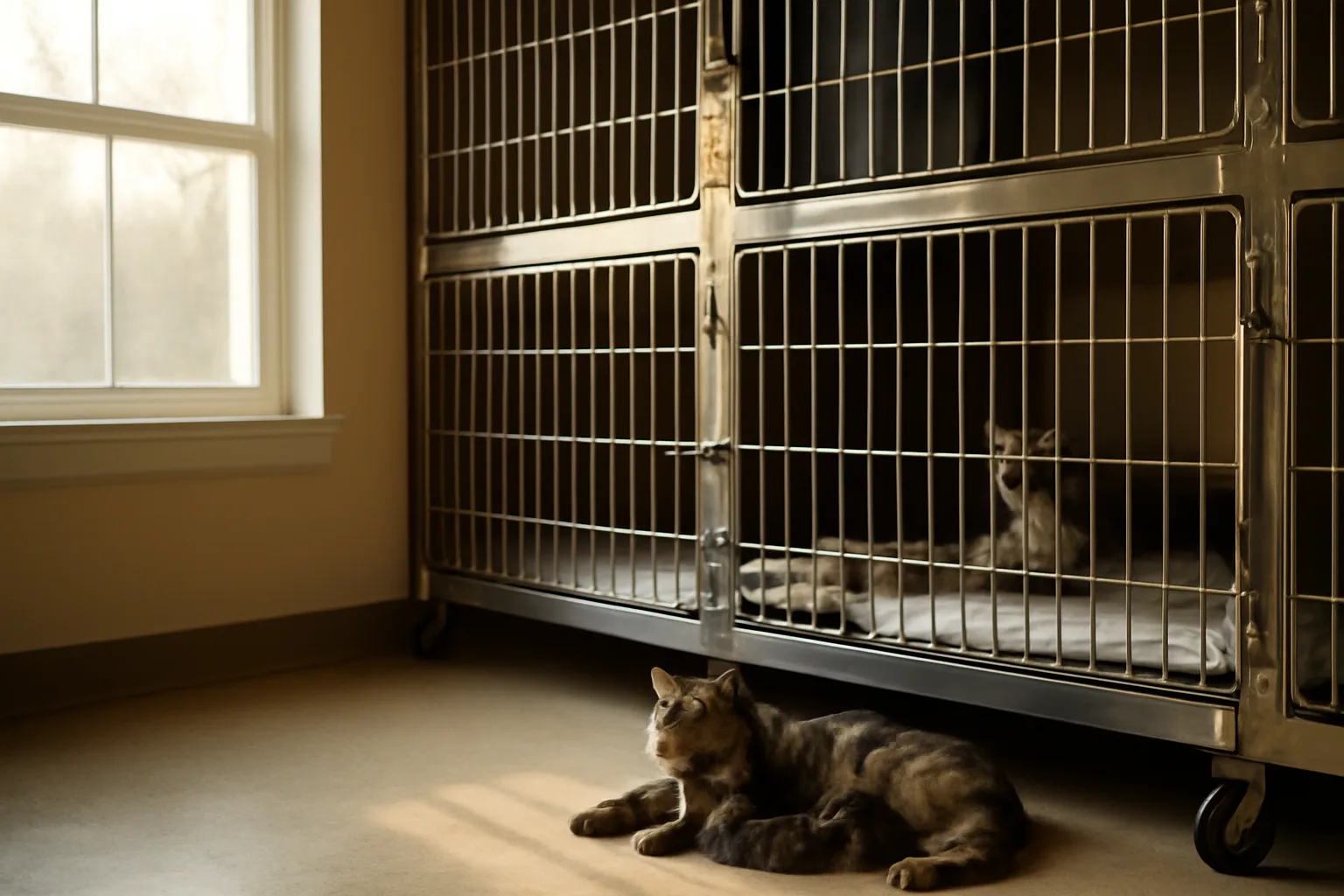
Housing setup. If you breed inside your home, you need a dedicated kitten room or safe enclosure. Expect $300-$1,200 for stainless steel cages, washable flooring, litter stations, and nursery boxes. Outdoor catteries need a poured concrete floor and predator-proof wire, running $2,000-$4,000 for a small insulated building. Heated indoor space is non-negotiable for Arkansas winters.
Vet care year one. Pre-breeding screening (FIV/FeLV, echocardiogram for breeds like Maine Coons, DNA panels), plus spay/neuter for pet kittens, plus an emergency fund. $800-$2,000 per queen per year is realistic, with the higher end for breeds needing cardiac or hip screening. Wellness and vaccines for kittens add about $100-$150 per kitten before sale.
Registration and paperwork. CFA or TICA cattery name registration is about $50-$100 one-time. Litter registrations cost $12-$20 per kitten. The USDA license is free for most new breeders [2].
Other first-year items: high-quality food ($400-$600/year for two adult cats), litter ($200-$300), show entry fees if you campaign your cats ($50-$200 per show), website and marketing ($100-$500).
All together, a realistic Arkansas cattery launch sits between $3,500 and $9,000 including breeding stock. The wide range depends on whether you already own the cats and space, whether you build outdoor housing, and how much vet diagnostics your breed requires.
| Cost Category | Low Range | High Range | Notes |
|---|---|---|---|
| Breeding stock (2 cats) | $2,000 | $7,000 | Purchase price, transport, initial vetting |
| Indoor housing setup | $300 | $1,200 | Cages, nursery supplies, flooring |
| Outdoor cattery building | $2,000 | $4,000 | Optional; concrete, wire, insulation |
| Vet care, year one | $800 | $2,000 | Per queen: screening, emergencies |
| Registration fees | $50 | $120 | CFA/TICA cattery name, litter registrations |
| USDA license | $0 | $0 | Free for 5 or fewer breeding females [2] |
| Food and litter | $600 | $900 | Annual, 2 adult cats |
Total realistic range for a new Arkansas cattery: $3,500-$9,000.
How long does it take to start a cattery in Arkansas?
The paperwork side is fast. The living-animal side is slow. That gap catches first-timers every time.
USDA licensing timeline: if you need one, submit the application packet, get your pre-inspection, and wait for APHIS to process. Current processing runs 4 to 8 weeks from application to license issuance, but the agency doesn't publish a live processing clock. You can call the USDA APHIS Animal Care office to get a current estimate. The inspection itself often happens within 2-3 weeks of your application if you're ready. They inspect your facility, records, and veterinary care plan. Fail it, and you get time to correct the issues before a re-inspection.
Arkansas has no state processing time because it has no state cattery license.
The real timeline, the one that matters for when you'll hold a kitten sale:
- Finding and acquiring breeding-quality cats: 2 to 6 months. Good breeders rarely have kittens available on demand. You'll wait for a planned litter, then wait for the kitten to reach 12-16 weeks for pickup.
- Quarantine and settling: 1 month after bringing cats home before health screening.
- Pre-breeding health clearance: 1 month for vet appointments, DNA tests (results take weeks), and cardiac screenings.
- Cycling and breeding: Queens don't breed on demand. They cycle seasonally and individually. From first attempt to confirmed pregnancy can take 1 to 4 months.
- Gestation: 63-65 days.
- Kitten raising to sale age: 12-16 weeks.
- Total from decision to first rehomable litter: 12 to 18 months for a well-planned cattery. Anyone promising "6 months" is skipping health clearance, quarantine, or kitten socialization time.
"The USDA APHIS license application is free for dealers with five or fewer breeding female dogs or cats" [2]. This is a direct quote from the USDA fee schedule. That's your paperwork speed advantage. The biological calendar is your real constraint.
What is the USDA license cost for Arkansas catteries?
When you check the APHIS Animal Care fee table, the numbers are small. For a Class A license with 5 or fewer breeding females, the application fee is $0 and the annual license fee is $0 [2]. Count only sexually intact females used for breeding, not retired queens or kittens.
If your breeding female count hits 6-10, the annual fee jumps to $120 [2]. 11-25 females costs $225. 26-50 costs $525. Over 50 costs $750. You pay one renewal per year, and APHIS invoices you. The license covers a three-year term before you must renew the license itself (more than pay the annual fee) [2].
There is no per-kitten fee, no per-litter fee, no inspection surcharge for routine compliance inspections. If you fail an inspection and need a re-inspection, APHIS can charge for that re-inspection, but routine pre-license and compliance inspections are included.
For most Arkansas breeders starting with one or two queens, the USDA license cost line item is zero. That's not a loophole, it's the published USDA Animal Care fee schedule [2].
How do Arkansas zoning rules shape your cattery cost?
Nobody at the state capitol will ask about your cattery. Your county planning department might. Arkansas zoning is hyper-local. In Fayetteville, residential zones allow up to four adult dogs or cats per household without a kennel permit; above that, you need a conditional use permit from the Planning Commission. In Little Rock, the code restricts "noncommercial kennels" but doesn't specifically cap catteries; however, a nuisance complaint can still trigger code enforcement if odors or noise cross property lines.
In unincorporated Washington County, the zoning resolution barely mentions companion animals, but any "commercial kennel" needs a permit, and a cattery that ships kittens could be interpreted that way. Ask your county planner before you buy land or build a cattery housing structure.
Setback requirements for animal housing are common: 50 to 100 feet from neighboring dwellings in rural residential zones. That determines whether you can build an outdoor cattery building on your existing lot or need to find acreage. Acreage in rural Arkansas costs $3,000-$8,000 per acre, far cheaper than in most states, so land cost isn't the barrier it is in California or New York. The barrier is the rules on what you can place on that land.
A phone call to your county planning department costs nothing and can save you from spending $4,000 on a cattery building you have to tear down. Ask three questions: maximum number of intact cats allowed on my zoned lot, setback for animal housing, and whether the county requires a home occupation permit for breeding and selling. Write down the planner's name and date you called.
How much does registering a cattery name and litter paperwork cost?
Registration isn't legally required to breed cats in Arkansas, but it's practically required to sell purebred kittens at anything close to a reasonable price. Buyers expect CFA or TICA papers.
CFA cattery name registration: $50 one-time fee [3]. You pick a name, CFA checks it isn't taken, and it's yours as long as you renew annually ($35 renewal). TICA cattery name registration is $50 for a five-year registration [4]. Both registries let you do this online.
Litter registration: CFA charges $12 per litter plus $2 per kitten for individual kitten registration if done together at litter registration [3]. TICA charges $12 for litter registration [4]. Individual kitten registration in TICA is $10-$15 depending on timing and method. Pedigree certificates, five-generation, cost extra: about $15-$25 per certificate [3].
If you show cats, entry fees run $50-$120 per show per cat, not counting travel. Showing isn't mandatory but builds buyer trust and proves your cats meet breed standards to judges.
What is the first year vet bill for an Arkansas breeding queen?
This is the number that shocks people. A vet clinic in Arkansas (Little Rock metro prices) charges $45-$75 for an office visit. Pre-breeding bloodwork panel: $120-$200. FIV/FeLV snap test: $35-$55. Fecal exam: $35-$50.
For breeds with genetic heart disease risk, an echocardiogram by a veterinary cardiologist costs $300-$600. There are board-certified cardiologists in Little Rock and Northwest Arkansas, but not in most rural counties; you may drive 2-3 hours for this appointment. DNA panels from UC Davis or Wisdom Panel run $100-$200 per cat for breed-relevant markers.
Emergency visit for a dystocia (difficult birth) or a pyometra (uterine infection): $800-$2,500. Many breeders keep a $2,000 emergency fund per queen.
Routine kitten care before sale: first vaccine at 8 weeks, second at 12 weeks, fecal exams, deworming schedule, and a health certificate if the kitten travels across state lines. Budget $100-$150 per kitten. Spay/neuter before sale is increasingly the norm for pet kittens and adds $120-$250 but usually gets passed to the buyer via a higher kitten price.
Total realistic vet spend for one breeding queen in the first Arkansas year: $800 on the low end (healthy cat, no cardiac screening, no emergency). $2,000+ if you screen thoroughly and have one unexpected sick visit.
How does real Arkansas cattery revenue offset costs?
A well-bred purebred kitten in Arkansas sells for $800 to $1,800 depending on breed, pedigree quality, and whether the breeder shows. Maine Coons, Bengals, and Sphynx kittens push higher, sometimes $2,000+. A small cattery with one queen producing 2 litters per year averaging 4 kittens per litter puts 6-8 kittens on the market annually (keeping one for replacement). At $1,200 average per kitten, that's $7,200-$9,600 gross revenue.
Subtract $2,000-$3,000 in annual operating costs (food, litter, vet maintenance, registrations, show fees) and the operation covers its own costs in year two or three. Year one is almost always a net loss because you bought cats and built housing. The economics work for a hobbyist who wants the breed, not for someone trying to replace a salary.
"Nobody in Arkansas gets rich breeding cats" is not a statistic, it's field observation repeated by every long-time breeder I've talked to. The money comes out even, sometimes slightly ahead, for an efficient, reputable small cattery. Volume breeding with many queens changes the economics but also changes the USDA fee tier and welfare picture significantly.
How do you buy breeding cats without getting burned?
The biggest financial risk in year one isn't the USDA, it's buying a cat that can't reproduce or carries a genetic time bomb. Spend more on the right cat and less on everything else upfront.
Red flags: a seller who won't show you the parents' genetic test results, a breeding contract that's vague about genetic guarantees, a price under $800 for any purebred breeding cat, a seller who ships kittens under 12 weeks, no CFA/TICA registration available, and any breeder who has more than 3-4 litters on the ground at once without dedicated staff.
Green flags: a contract that spells out replacement terms if the cat fails pre-breeding screening, registration papers in hand at pickup, the breeder actively shows or competes with their cats, and a waiting list for their kittens. Expect to pay $1,500-$2,500 for a solid breeding female from such a breeder. The upfront premium pays for itself in avoided vet bills and successful litters.
Local Arkansas breeders exist for many breeds (Maine Coon, Bengal, Ragdoll, Persian, Sphynx), but the pool is small. Most serious breeders travel to Texas, Missouri, or further to acquire foundation stock. Transport costs add $200-$500 whether you drive or fly the cat. Budget it.
What does building an Arkansas cattery facility cost indoor vs outdoor?
Arkansas summers hit 95°F with humidity that makes cats miserable without climate control. Winters drop into the 20s and occasionally the teens. So outdoor catteries need insulation, heating, and cooling, more than wire and a roof.
Indoor setup in a spare bedroom or basement: easiest path. Dedicate a room with easy-to-clean flooring (vinyl plank or sealed concrete), add stainless steel cages for queens with litters (stackable units run $150-$400 each), install an exhaust fan for odor control ($100-$250), and build a kitten-safe play area. Total indoor conversion: $300-$1,200, assuming the room already exists. No permit typically needed inside your home for hobby numbers.
Outdoor cattery building: a 10x12 insulated shed with concrete floor, split mini heat pump for HVAC, wire mesh enclosures attached for outdoor access, and predator-proofing (buried wire apron, roofed runs) costs $4,000-$8,000 built. This requires building permits in most counties and triggers the setback rules discussed earlier. The advantage is separation of home life and cattery life, plus better biosecurity. The disadvantage is cost and maintenance.
Most Arkansas breeders start indoor and stay indoor. It keeps overhead low and cats under constant observation. If you expand past five breeding females, outdoor housing becomes more practical for space and sanitation.
What are ongoing cattery costs month to month in Arkansas?
Once the cattery is running, what does a typical month look like financially?
Food: $35-$70 per month for two high-quality dry and canned diets. Adding raw or freeze-dried components pushes it higher. Litter: $25-$40 monthly with multi-cat clumping litter bought in bulk. Preventative meds: monthly flea/tick/heartworm prevention is off-label for cats in many products but debated among breeders; many use Revolution Plus seasonally at $20-$25 per dose per cat.
Unexpected vet triage: a stud cat abscess, a kitten with ringworm, a queen with mastitis. Any of these costs $150-$400 at an Arkansas vet. That happens at least once a year in an active breeding program.
Registry renewals: $35-$50 annually. Website and domain: $100-$200 per year. Liability insurance: a few insurers write animal business policies; if you can find one for a home-based cattery it's $300-$600/year, but many breeders operate without it.
Total monthly operational cost for a 1-2 queen cattery, excluding mortgage/rent, runs $250-$500. Tuck away another $150/month into the vet emergency fund. That fund is what separates breeders who can handle a C-section at 2 AM from those who face a catastrophic choice.
Arkansas electricity rates are among the lowest in the nation (about $0.10-$0.11 per kWh) [5]. Heating and cooling an indoor cattery room adds maybe $30-$50 monthly. An outdoor heated building adds more: perhaps $60-$100 monthly in peak winter. This is a minor line item but real.
What is the full timeline from zero to first kitten sale in Arkansas?
Here's a month-by-month realistic path, assuming you start with no breeding cats and no set-up.
Month 1-2: Research breeds, attend a cat show (CFA or TICA regionals in Dallas, Tulsa, or Little Rock), contact breeders, join a breed club. Place deposit on a breeding-quality kitten.
Month 3-6: Wait for the kitten to be born and raised to pickup age (usually 12-16 weeks). During the wait, prepare your cattery room, buy equipment, register your cattery name with CFA or TICA. If you plan to ship kittens, start the USDA license paperwork now.
Month 6-7: Bring the kitten home. Quarantine and settle. Slight USDA pre-license inspection if you're going that route.
Month 7-8: Pre-breeding vet work: full blood panel, genetic tests, echocardiogram if indicated. Wait for results.
Month 8-9: If the queen is mature enough (most breeders wait until 12-18 months for first breeding, depending on breed), begin monitoring cycles and introduce to stud or arrange stud service.
Month 9-12: Breeding attempts. Conception may take 1-3 cycles. Gestation is 63-65 days. Kittens born.
Month 12-15: Raise kittens, vaccinate, socialize, register the litter, vet check, and begin screening buyers.
Month 15-18: Kittens go to new homes at 12-16 weeks.
Total: 12-18 months. If you buy an adult proven breeding queen and skip the kitten raising phase, you could shorten this to 6-10 months, but proven queens cost $3,500-$6,000, often more.
Is there a CatteryPath kit shortcut for Arkansas new breeders?
You can assemble all the federal paperwork, state zoning guidance, facility plan, and recordkeeping forms yourself. It takes hours of reading USDA APHIS policy, calling county planners, and checking AR code chapters. A kit that bundles the done-for-you USDA application walkthrough, state-by-state regulation summaries, breeding record templates, and facility design guidance saves the research time. CatteryPath sells a $149 one-time USDA & State Kit for every state including Arkansas. It's a paperwork map, not a legal advice service. If you want the kit path, head to /start.
What mistakes add thousands to Arkansas cattery cost?
Here's what went wrong for breeders I've talked to in this region:
Buying a breeding cat without a written contract that covers congenital defects. A $1,500 cat that throws heart defects in multiple kittens costs you every kitten sale plus your reputation. A solid contract from a reputable breeder is worth more than the price difference.
Skipping pre-breeding echocardiograms in HCM-prone breeds. An echo costs $400. A dead queen or a litter of cats that develop HCM at age 2 costs you everything. In Arkansas, you can get echos at BluePearl in Little Rock or the specialty practices in Fayetteville-Rogers area.
Building without checking zoning. A breeder in Benton County spent $6,000 on a small cattery building and had to remove it because it violated the 50-foot setback from the neighbor's property line. That conversation with the county planner beforehand would have been free.
Not having a written kitten contract. A buyer who wants a refund six months later for a cat they failed to vaccinate can become a small claims headache. A signed contract with clear health guarantee terms (usually 72-hour vet check and a genetic health guarantee of 1-2 years) protects both sides.
Trying to start with three or four queens simultaneously. The learning curve on feline reproduction is steep. One queen first. Learn dystocia signs, neonatal care, weaning protocols. Then add a second queen. Multiple problem litters at once overwhelm a solo breeder fast.
Frequently asked questions
is a cattery license required in arkansas?
Arkansas has no state cattery license. You may need a federal USDA Class A license if you sell kittens sight-unseen to buyers across state lines. If buyers visit your home to pick up kittens, the retail exemption likely applies, and no USDA license is needed. Check with USDA APHIS Animal Care to confirm based on your sales model.
do i need a business license for a cattery in arkansas?
Most Arkansas cities don't require a specific business license for home-based pet breeding if gross revenue stays under local hobby thresholds. Little Rock requires a general business license for any for-profit activity generating income. Check your city clerk. Registering a DBA or LLC with the Arkansas Secretary of State is optional but can separate personal and business liability.
what is the most expensive part of starting an arkansas cattery?
Breeding stock. Acquiring two quality cats with health clearances and registration papers runs $2,000-$7,000. Vet costs in year one, especially pre-breeding screening and emergency care funds, come second. Housing costs are third and vary hugely depending on indoor vs outdoor buildout.
can i run a cattery out of my home in arkansas?
Yes, most Arkansas hobby breeders operate from home. This keeps facility costs down and cats under observation. Check your local zoning code's animal limit and home occupation rules. Residential zones in cities like Fayetteville cap adult cats at four per household without a permit. County rules differ.
how many cats can i legally breed in arkansas?
Arkansas state law sets no numerical limit. Local zoning codes set limits per household, often 3-4 adult cats in residential zones without a conditional use permit. The USDA license threshold is five or fewer breeding females for the free tier. Above that, fees begin at $120 annually [2].
how long does the usda license process take in arkansas?
The USDA license process typically takes 4-8 weeks from application to issuance. An inspector visits your facility after you submit the application, usually within 2-3 weeks. The USDA does not publish a live processing clock, so call the regional APHIS Animal Care office for a current estimate.
does the usda inspect catteries in arkansas?
Yes, if you hold a USDA license. APHIS Animal Care inspectors conduct pre-license inspections and routine unannounced compliance inspections. Inspections check housing, sanitation, veterinary care plan, and records. The USDA publishes inspection reports online for all licensed facilities.
what breed is most profitable for an arkansas cattery?
No breed is reliably profitable for a small hobby cattery in Arkansas. Breeds with higher price points like Maine Coons, Bengals, and Sphynx carry higher vet costs and genetic screening needs. Ragdolls and Persians sell well but require extensive grooming. Focus on a breed you genuinely want to live with for a decade, not on profit projections.
how much do purebred kittens sell for in arkansas?
Pet-quality purebred kittens from a reputable Arkansas breeder typically sell for $800-$1,800. Show-quality kittens with breeding rights can fetch $2,000-$3,500. Maine Coons, Bengals, Savannahs, and Sphynx kittens tilt toward the higher end. CFA or TICA registration, health records, and a written contract are standard at these prices.
do i need a vet inspection to sell kittens in arkansas?
Arkansas has no state-mandated vet inspection for selling kittens. Buyers expect a health certificate signed by a licensed vet, especially for out-of-state sales. Many states a kitten is shipped to require a Certificate of Veterinary Inspection issued within 10-30 days of transport. The USDA also requires a health certificate for animals shipped across state lines under the license program.
what vaccinations do arkansas cattery kittens need before sale?
Arkansas has no state-mandated kitten vaccine protocol. The standard of care in the breeding community is FVRCP vaccine series (first dose at 8 weeks, second at 12 weeks), plus rabies vaccine at 12-16 weeks if the kitten stays in-state after sale. FeLV vaccine is recommended for cats with outdoor access. Deworming protocol per vet guidance. Always provide a written vaccine record to the buyer.
is there financial help for starting a cattery in arkansas?
No USDA or state grants exist for cattery startups in Arkansas. The USDA license is free for small breeders [2]. Small business loans through Arkansas banks or the SBA are theoretically possible but unlikely for a hobby cattery with low revenue projections. Most breeders self-fund from savings or day-job income.
how do i register my cattery name in arkansas?
Cattery name registration goes through a cat registry, not the state. CFA cattery name registration costs $50 one-time and $35 annual renewal [3]. TICA cattery registration is $50 for five years [4]. This gives you an exclusive cattery prefix for registering kittens. You register online through the registry's website.
do i need liability insurance for an arkansas cattery?
Arkansas does not require liability insurance for catteries. It's optional. A business liability policy covering animal-related incidents costs $300-$600/year if you can find an insurer that writes policies for home-based breeders. Many hobby breeders operate without it, relying on careful buyer contracts and a well-maintained facility to minimize risk.
Sources
- USDA APHIS Animal Care, Animal Welfare Act Licensing and Registration: Any person who sells dogs or cats sight-unseen in commerce for pet purposes requires a USDA Class A license; in-person retail sales are exempt.
- USDA APHIS Animal Care License Fee Schedule: Application fee is $0 for Class A licenses with 5 or fewer breeding females; annual license fee is $0 for same tier. Fees for 6-10 females: $120 annually.
- Cat Fanciers' Association fee schedule: CFA cattery name registration is $50, annual renewal $35, litter registration $12 plus $2 per kitten registered concurrently with litter.
- The International Cat Association fee schedule: TICA cattery name registration is $50 for five years; litter registration $12; individual kitten registration $10-$15 depending on timing.
- U.S. Energy Information Administration, Arkansas electricity rates: Arkansas residential electricity price is approximately 10-11 cents per kWh, among lowest in the U.S.
- USDA APHIS Animal Care, Animal Welfare Act: USDA license application requirements, inspections, and exemptions defined in Title 9 CFR Part 2.
- Arkansas Code Title 20, Chapter 19, Rabies Control Act: Arkansas animal law focuses on rabies control and livestock; no statewide cattery licensing exists in the code.
- City of Fayetteville, Arkansas Code of Ordinances, Chapter 10 Animals: Fayetteville limits household animals to four adult dogs or cats without a kennel permit in residential zones.